
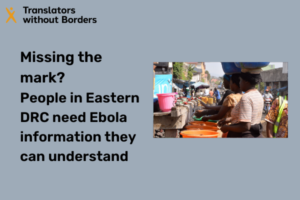
People at risk of contracting Ebola need information to keep themselves and their families safe. Information they don’t understand will not help them. They need clear communication in plain, localized language, in a format they understand, and through channels they trust. To learn how to better communicate, TWB conducted the rapid language needs assessment in […]
Navigating global guidance

The language lesson: What we’ve learned about communicating with Rohingya refugees
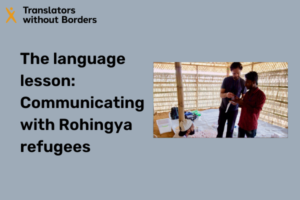
Rohingya refugees have a right to information and two-way communication in their own language, in a format they understand, and through channels they prefer and trust. In the past year, access to information has improved in the Rohingya refugee response as a result of an increased humanitarian focus on communicating with communities. Yet language barriers […]
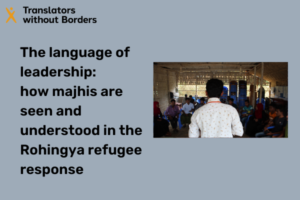
The language of leadership: The words that define how majhis are seen and understood in the Rohingya refugee response
Language for learning: How language use affects Rohingya children’s educational experience in Cox’s Bazar
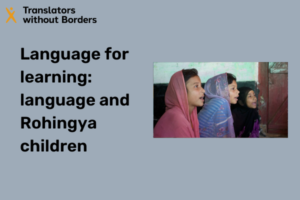
This report examines how language use affects Rohingya refugee children’s educational experience in the camps around Cox’s Bazar in Bangladesh. We identified four key factors that influence how Rohingya refugee children receive an education: Government requirements: The Government of Bangladesh imposes certain requirements on education service providers. The complex linguistic environment: The multilingual nature of […]
Signage language: helping Rohingya refugees find their way
Giving birth and caring for newborns in the Rohingya camps
Rohingya women’s pregnancy experiences and perspectives
Community health workers: The main source of health information for Rohingya women
How Rohingya people think and talk about food and nutrition
Cox’s Bazar common service evaluation 2021
Read our report to learn what role has the common service played in helping agencies communicate with Rohingya and host communities during the COVID-19 pandemic.
Rohingya experiences of healthcare in the camps
- « Previous Page
- 1
- …
- 3
- 4
- 5
- 6
- 7
- …
- 13
- Next Page »