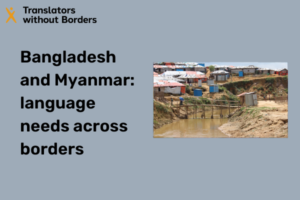
The Rohingya are marginalized in Myanmar society, as reflected in their lack of legal status and recognition as citizens. Across the border in Bangladesh, they are also unable to participate fully in society due to their lack of legal status and recognition as refugees. In both contexts, language barriers reinforce that exclusion. In March 2019, […]
“How can we contribute if we can’t participate?” The accessibility of humanitarian guidance to local and national organisations
Navigating global guidance
Language for learning: How language use affects Rohingya children’s educational experience in Cox’s Bazar
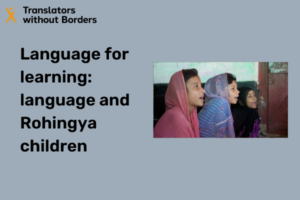
This report examines how language use affects Rohingya refugee children’s educational experience in the camps around Cox’s Bazar in Bangladesh. We identified four key factors that influence how Rohingya refugee children receive an education: Government requirements: The Government of Bangladesh imposes certain requirements on education service providers. The complex linguistic environment: The multilingual nature of […]
Language diversity in the COVID-19 pandemic
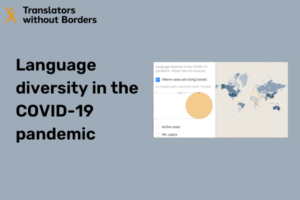
People have a right to access the information they need during the COVID-19 pandemic. Yet often that information is not available in languages and formats they understand. COVID-19 is rapidly expanding in linguistically diverse countries. Organizations supporting the response need to develop communication strategies that cater to the needs of marginalized language speakers in these […]
Οδηγός Πεδίου για την Ανθρωπιστική Διερμηνεία και την Πολιτισμική Διαμεσολάβηση
Ο οδηγός αυτός καταρτίστηκε από τους Translators without Borders (TWB) για υποστήριξη των υπευθύνων πεδίου, των διερμηνέων και των πολιτιστικών διαμεσολαβητών στις καθημερινές επαφές και καθήκοντά τους. Ο οδηγός καταρτίστηκε στο πλαίσιο του προγράμματος των TWB Words of Relief, σε συνεργασία με την οργάνωση Save the Children. Κατεβάστε εδώ. Διατίθεται επίσης στα αγγλικά και τα ισπανικά.
Guía de campo para la interpretación humanitaria y la mediación cultural
Translators without Borders (TWB, Traductores sin Fronteras) ha elaborado esta guía para brindar apoyo a los directores de campo humanitarios, intérpretes y mediadores culturales en sus interacciones y responsabilidades diarias. La guía se ha creado como parte del proyecto Words of Relief (Palabras de alivio) de TWB, en asociación con Save the Children (Salven a […]
Field guide to humanitarian interpreting and cultural mediation
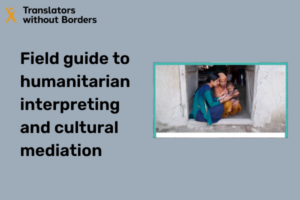
This guide has been developed by Translators without Borders (TWB) to support humanitarian field managers, interpreters and cultural mediators in their daily interactions and responsibilities. The guide was developed as part of the TWB Words of Relief project, in partnership with Save the Children. Download here. Other resources that might interest you: The power of […]
Rohingya refugee crisis response – an update
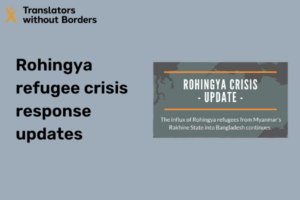
The Translators without Border team is implementing a program in Cox’s Bazar Bangladesh that will develop language capacity and resources in the language and format that the Rohingya people can understand. The program aims to bridge the language gap between humanitarian responders and those affected by the refugee crisis. Here is an update on how […]
Discussing education in the Rohingya language
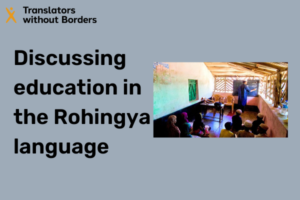
Download or view in a new tab our Rohingya education language guide here.
Translating information to prevent sexual exploitation and abuse
Sexual exploitation and abuse continue to occur in humanitarian contexts worldwide. We believe that language can help prevent it. Preventing abuse starts by making the rules on sexual conduct clear and available in languages people can understand, so everyone knows what is acceptable. The international humanitarian world’s coordination body, the Inter-Agency Standing Committee (IASC), developed […]