Complaints and feedback mechanisms are an essential part of the humanitarian community’s ability to be held accountable for the assistance and protection we deliver. You can view our research brief below or here. Also is available an illustrated version created to guide you through.
Language barriers in the humanitarian response in Northeast Nigeria
MSNA language data can help humanitarians communicate better with affected people
Are they listening? The challenges and opportunities of multilingual audio communication in Borno State
People affected by the conflict in linguistically diverse Northeast Nigeria need to give and receive critical information in multiple languages. Options for doing so are currently limited, but rethinking how humanitarians use audio messaging to reach their intended audiences could change that. Research shows that audio is the most widely understood communication format among internally […]
The 2021 multi-sector needs assessments (MSNAs) should collect data on the languages of affected people
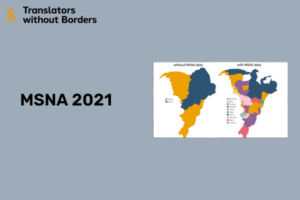
The 2021 multi-sector needs assessments (MSNAs) are a critical opportunity to strengthen the evidence base for effective and accountable humanitarian response plans. Humanitarian donors and responders need data on the languages and communication preferences of affected people as a basis for funding and programming decisions. At a minimum, asking one simple question on language can […]
Language profile of five IDP sites in Maiduguri: Farm Centre Camp
This site report for Farm Camp Centre summarizes the key findings from a comprehension study designed by Translators without Borders and conducted by Girl Effect using Oxfam communication materials among 951 internally displaced people (IDPs) and host community members at five sites in the Maiduguri area of Borno, Northeastern Nigeria. View it below or download […]
Language profile of five IDP sites in Maiduguri: Muna Garage Camp
This site report for Muna Garage summarizes the key findings from a comprehension study designed by Translators without Borders and conducted by Girl Effect using Oxfam communication materials among 951 internally displaced people (IDPs) and host community members at five sites in the Maiduguri area of Borno, Northeastern Nigeria. View it below or download here. Other […]
Words of Relief impact study of rural and urban Kenyans
Does translated health information lead to higher comprehension? We conducted a research study to examine the level of comprehension of health information when presented to Kenyans in English and translated into Swahili. You can view it our impact study of rural and urban Kenyans here. Other resources that might interest you: Words of Relief – […]
In need of words: Using local languages improves comprehension for people affected by Cyclone Idai in Beira, Mozambique
Read and download the report brief in English, Portuguese, Sena, and Chwabo.
What Matters? Humanitarian Feedback bulletin
BBC Media Action, Internews, and Translators without Borders are working together to improve two-way communication between the Rohingya refugees, the host communities, and the humanitarian actors. What Matters? provides a snapshot of feedback received from affected community members, to assist sectors to better plan and implement relief activities with communities’ needs and preferences in mind. […]