Translating information to prevent sexual exploitation and abuse
Sexual exploitation and abuse continue to occur in humanitarian contexts worldwide. We believe that language can help prevent it. Preventing abuse starts by making the rules on sexual conduct clear and available in languages people can understand, so everyone knows what is acceptable. The international humanitarian world’s coordination body, the Inter-Agency Standing Committee (IASC), developed […]
TWB’s annual report 2016-2017
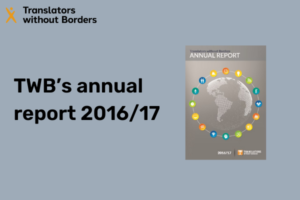
The 2017 fiscal year was a remarkable year of growth for Translators without Borders. The qualities that we hold high as an organization such as innovation, professionalism, and creativity, were strongly reflected in our programming. We are proud to share our annual report for the period April 2016 to March 2017 with highlights of our […]
TWB glossary for Myanmar
This glossary includes terminology for Rohingya, Rakhine, Myanmar, and English. View and use the glossary here.
TWB glossary for COVID-19
We are identifying key terminology that people use to talk about COVID-19 as well as commonly used technical terms to develop a multilingual, plain-language glossary. The glossary is designed to assist field workers and interpreters engaging with communities to raise awareness about COVID-19. It aims to improve communication between responders and affected communities by providing […]
TIP SHEET: Interpretation and sensitive topics – FR
View our Tip Sheet: Interpretation and sensitive topics (French) in a new tab here.
TIP SHEET: Interpretation and sensitive topics – AR
View our Tip Sheet: Interpretation and sensitive topics (Arabic) in a new tab here.
TIP SHEET: Interpretation and sensitive topics – SP
View our Tip Sheet: Interpretation and sensitive topics (Spanish) in a new tab here.
How to consider language when researching sexual exploitation, abuse, and sexual harassment (SEAH)
- « Previous Page
- 1
- …
- 4
- 5
- 6